
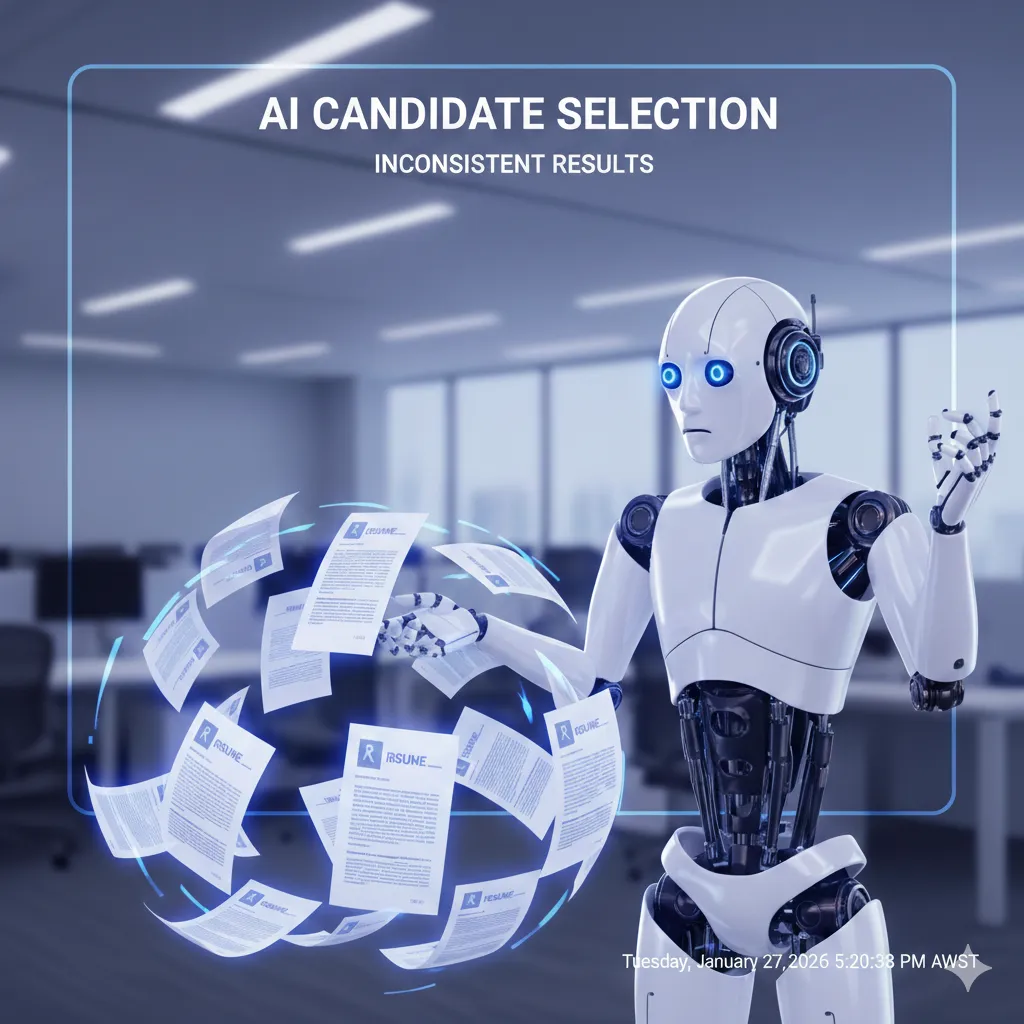
Why AI Alone Can't Pick the Perfect Candidate (and what to do about It)
Many companies are using AI tools to read resumes and pick candidates. But there's a problem.
The Problem with Using AI on Its Own
When you use these AI tools by themselves, they give different answers every time. It's like asking your friend to pick their favourite ice cream flavour. They might say chocolate today and vanilla tomorrow.
AI tools don't have a fixed way of judging people. One day, the AI might think a confident person is perfect. The next day, it might prefer someone quiet. This means two equally good candidates could get completely different scores.
Companies can't trust the results. And great candidates might get rejected for no good reason.
The Solution: Give AI a Proper Ruler
The answer is to give AI the right tools to work with. Think of it like building a house. You wouldn't just eyeball the measurements and hope for the best. You'd use a blueprint with exact specifications.
That's where personality profiling tools come in. Tools like DISC, Myers-Briggs, or other profiling systems are tried and tested ways of understanding how people behave at work. They've been used for decades.
Here's how it works. First, you do something called job benchmarking. This means you figure out exactly which personality traits and behaviours make someone successful in a specific role.
The clever bit? With some guidance and careful prompting, the AI can actually help generate this ideal candidate profile for you. You just give it a description of the position, and it works out which traits matter most.
This profile then becomes your yardstick. It's like having a template of the perfect person for the job.
When the AI now screens candidates, it measures every single one against that ideal profile. Same ruler. Same standards. Every single time.
Better Together
An integrated system works like a team. The profiling tool provides the structure and consistency. The AI provides the speed to read through hundreds of resumes quickly.
Together, they give you reliable, fair, and predictable results every time. The AI isn't guessing anymore. It's measuring properly.
That's not just better for companies. It's fairer for candidates too.
This is the first post in a series of posts where I look at the good, the bad and the ugly of AI in recruitment. I have spent the last couple of years researching the future of recruitment and how AI will affect the process of finding the best team members.
In my next post I will go into more detail about the some of the potential benefit of using AI in Recruitment.
