
What AI Sees in Candidates That You're Programmed to Miss
As hiring managers, we like to think we're pretty good at spotting talent. We've conducted dozens, maybe hundreds of interviews. We've developed our instincts. We know what to look for.
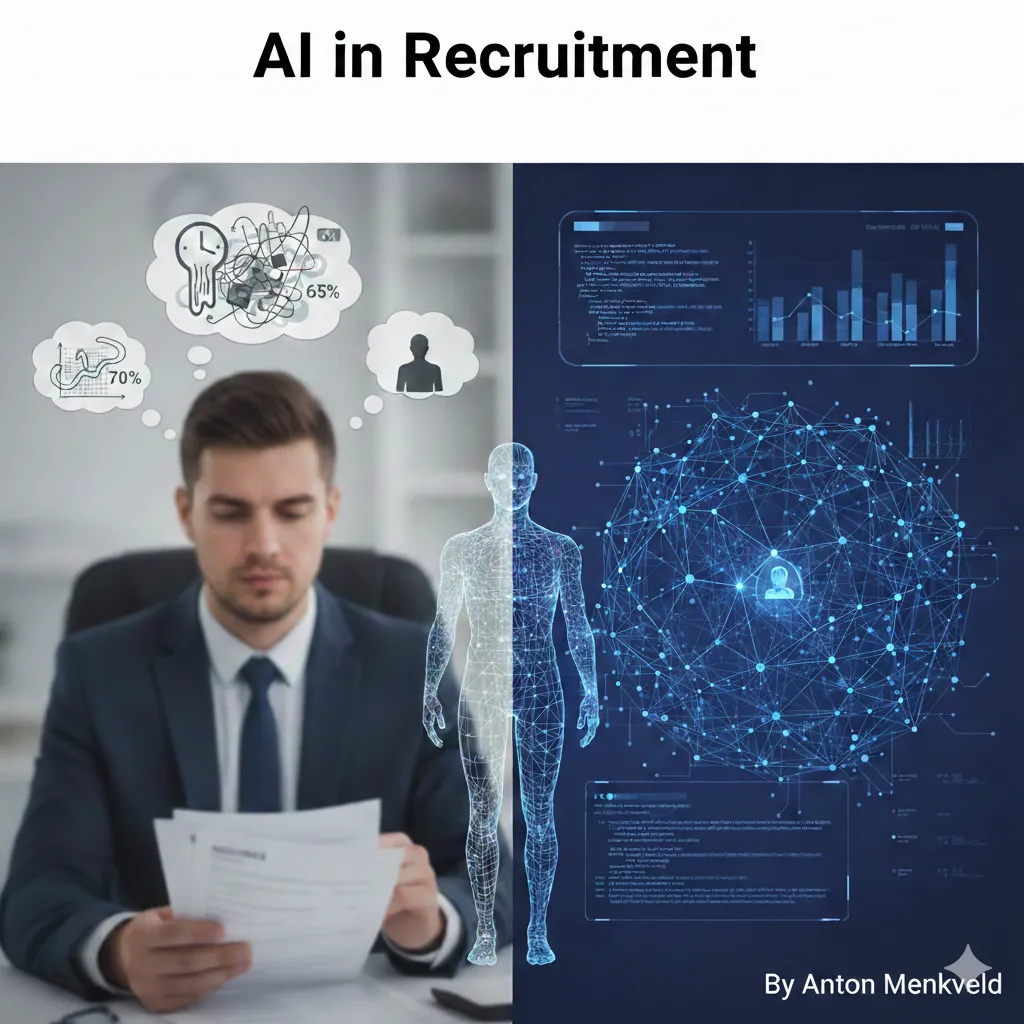
But here's the uncomfortable truth: our brains are terrible at processing complex patterns.
Why Our Pattern Recognition Fails
When you interview a candidate, you're trying to process an overwhelming amount of information: their resume, their answers, their body language, their tone, how they compare to the last three people you interviewed, and how they might fit with your team.
Your brain does what brains do—it takes shortcuts. It looks for familiar patterns, makes quick judgements, and fills in gaps with assumptions.
And we're particularly vulnerable to specific blind spots:
Inconsistency: Interview number eight on a Friday afternoon doesn't get the same quality of attention as interview number two on Tuesday morning.
Base Rate Neglect: If 70% of successful salespeople at your company are extraverted, we assume extraversion is essential. We miss that 65% of unsuccessful salespeople are also extraverted—so it's not actually that predictive.
Availability Bias: That amazing hire from last year who "just had something special"? We start looking for those same qualities, even if they're not what actually made them successful.
AI doesn't have these problems. Or more accurately, it has completely different problems.
The Micro-Patterns We Miss
AI can analyse subtle language patterns in application responses or interview transcripts that reveal cognitive styles and personality traits. It might notice that candidates who use more concrete examples rather than abstract language perform better in operational roles, whilst the opposite is true for strategic positions.
It can detect when candidates consistently take credit versus share credit, when they focus on challenges versus solutions, or when their energy level shifts between different topic areas—patterns that might span a 45-minute interview and get lost in our memory of the "overall impression."
AI processes hundreds of data points across thousands of hires to detect these nuanced relationships that human observation simply cannot track.
The Key Insight
AI isn't better because it's smarter. It's better because it's systematic, tireless, and immune to the cognitive shortcuts that lead us astray.
It finds patterns in the noise that we can't see—not because we're not intelligent enough, but because our brains weren't designed to process information this way.
The question isn't whether AI can spot patterns we miss. It absolutely can. The question is: what do we do with those insights?
That's where human judgement still matters, but that's a topic for another post.
This is the first post in a series of posts where I look at the good, the bad and the ugly of AI in recruitment.
In this series of posts I look at the good, the bad and the ugly of AI in recruitment. I have spent the last couple of years researching the future of recruitment and how AI will affect the process of finding the best team members.
In my next article, I'll explore the limitations of AI in hiring—because understanding what AI can't do is just as important as understanding what it can.
