
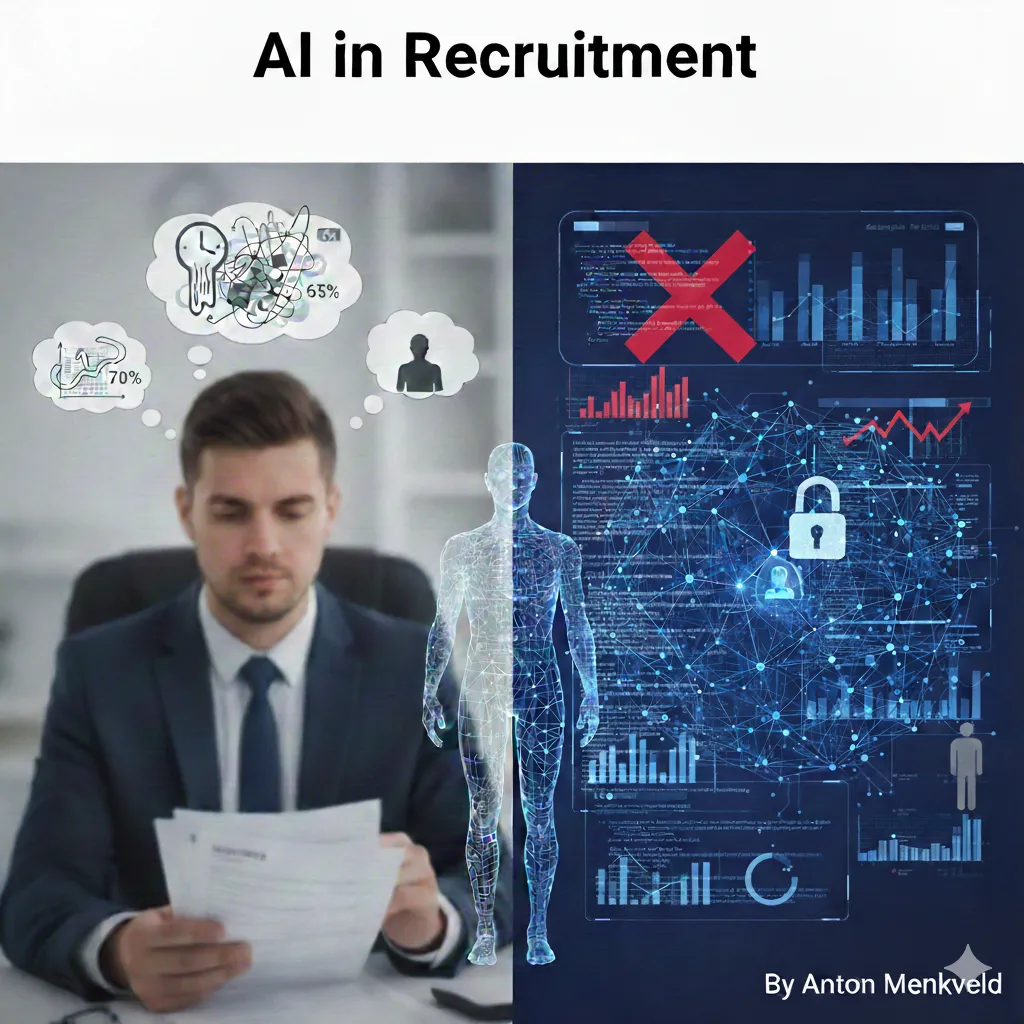
Where AI Falls Short in Hiring (and why you still need human judgement)
In my last article, I explained how AI spots patterns in candidates that our brains are simply not wired to detect. The evidence is compelling: AI can process more data, remain consistent across hundreds of interviews, and identify subtle correlations that humans miss.
So why not let AI make all our hiring decisions?
Because AI has some serious limitations - and understanding them is crucial if you want to use it effectively.
The Context Problem
AI Doesn't Understand Your Unique Situation
AI can tell you that a candidate scores highly on conscientiousness and analytical thinking. What it can't tell you is whether those traits will work in your specific environment.
Maybe your team is going through rapid change and needs someone adaptable rather than process-driven. Maybe your company culture values speed over perfection. Maybe this role reports to a manager who needs someone who can push back, not just execute.
These contextual nuances—the unwritten rules, the team dynamics, the strategic direction that's still being debated—are invisible to AI. They require human understanding of the situation on the ground.
The "Right Person, Wrong Time" Challenge
A candidate might be brilliant but not ready for this particular challenge right now. Or they might be overqualified in ways that will lead to frustration six months in. AI struggles with these temporal judgements because they require understanding not just the person and the role, but the trajectory of both.
The Human Elements AI Can't Measure
Chemistry and Team Dynamics
Can this person collaborate effectively with your existing team? Will they clash with your head of operations? Do they have the emotional intelligence to navigate your organisation's politics?
These questions require observation of subtle interpersonal dynamics. AI can analyse language patterns in interviews, but it can't sit in on a team meeting and feel the energy shift when someone speaks, or notice who defers to whom.
Motivation and Cultural Alignment
Why does this candidate want this job at this company? Are they running from something or running towards something? Do they understand what you're really asking them to do?
AI can flag inconsistencies in someone's career trajectory, but it can't probe the deeper "why" behind their choices. It can't gauge whether their eyes light up when you describe the mission or whether they're just interviewing well.
Growth Potential and Coachability
Some candidates are rough around the edges but have enormous potential. They're missing skills but have the drive and learning ability to acquire them quickly. They might not have the exact experience, but they have something harder to teach: curiosity, resilience, self-awareness.
These qualities are notoriously difficult to measure—even for humans. For AI, they're nearly impossible to quantify from standard assessment data.
The Right Balance
None of this means AI isn't valuable in hiring. It absolutely is.
But AI works best as a decision support tool, not a decision maker. It should:
Screen large volumes of applicants to identify promising candidates
Flag patterns and insights that humans might miss
Provide consistent, objective data points to inform discussions
Challenge our assumptions and biases
Humans should still:
Make final hiring decisions
Assess cultural fit and team dynamics
Evaluate context-specific factors
Override AI when the situation demands it
Ensure decisions align with strategic needs
The goal isn't to replace human judgement with AI. It's to augment human judgement with AI—to combine the pattern recognition capabilities of machines with the contextual understanding, intuition, and strategic thinking of humans.
That's where the real power lies.
In my next article, I'll explore how to actually implement this human-AI partnership in practice—what to automate, what to keep human, and where the handoffs should happen.
