
Behavioural science
How DISC Profiling Actually Predicts a Good Hire
Most people have run into DISC somewhere, a workshop, a team day, a personality quiz HR sent around. What most people haven't seen is DISC used properly, measured against a target instead of just describing a person in isolation. That's the difference this page is about.
Get my DISC profile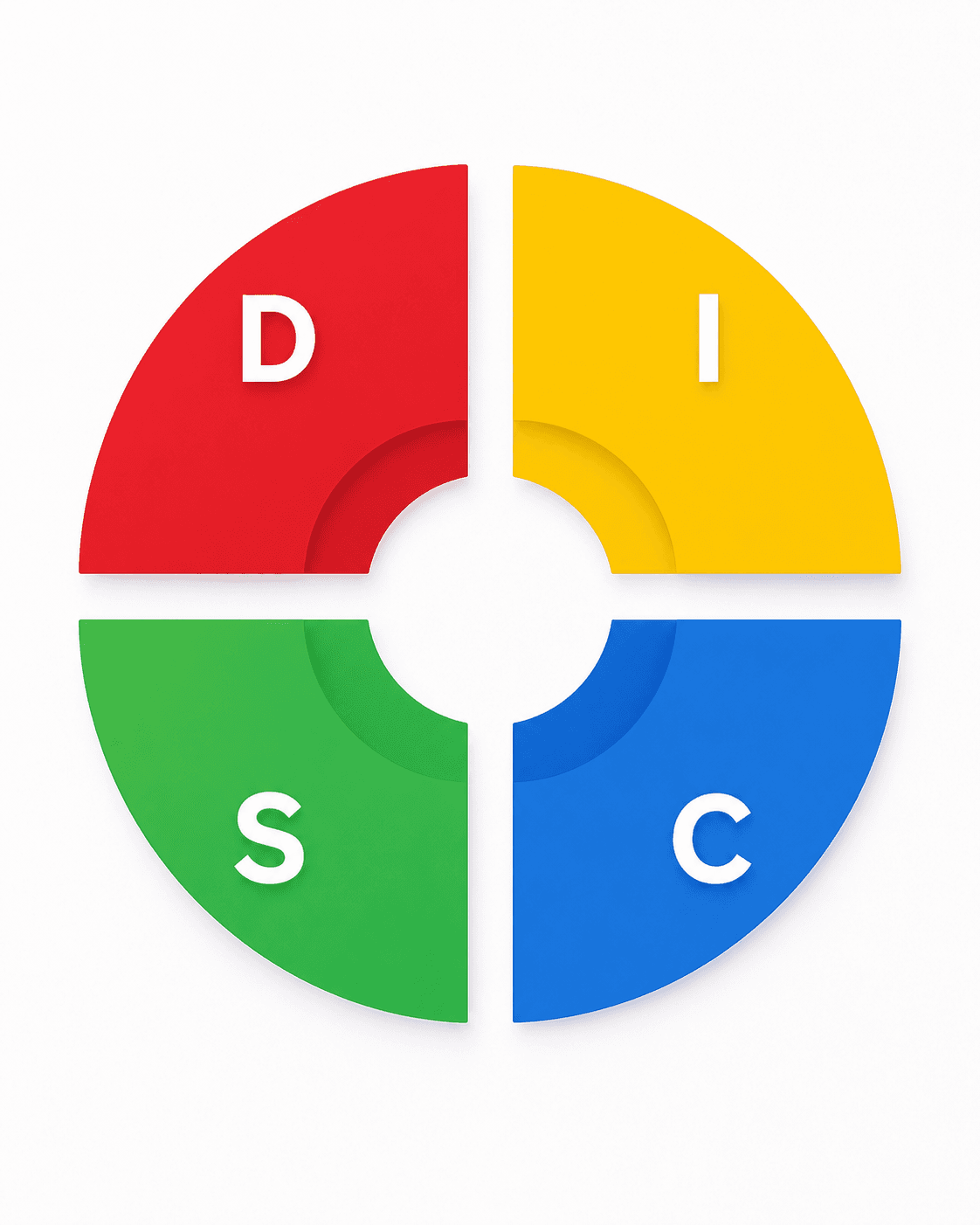
What DISC actually measures
DISC breaks behavioural style into four dimensions, Dominance, Influence, Steadiness, and Conscientiousness. It doesn't measure intelligence, skill, or experience. It measures how someone naturally operates under pressure, how directly they communicate, and how they respond to structure and detail. Two people can have identical resumes and completely different DISC profiles, and that difference often explains more about how they'll perform in a role than the resume ever could.
Get my DISC profile
Where DISC comes from
The framework dates back to 1928, when psychologist William Moulton Marston described four behavioural patterns in his book Emotions of Normal People. Marston never built an assessment himself. That came later, first from Walter Clarke's work in the 1940s, then from John Geier, who turned it into the commercial Personal Profile System in the 1970s. Nearly a century on, DISC is one of the most widely used behavioural frameworks in hiring and team development. It's simple enough to apply quickly and specific enough to be genuinely useful.
Get my DISC profile
Where most companies get it wrong
Most businesses that use DISC in hiring stop at describing the candidate. They run the test, read the report, form an impression. What's missing is the other half of the equation, what does the role itself actually need? Without that, a DISC result is just a personality description with nothing to measure it against.
Get my DISC profileHow GrowMyTeam does it differently
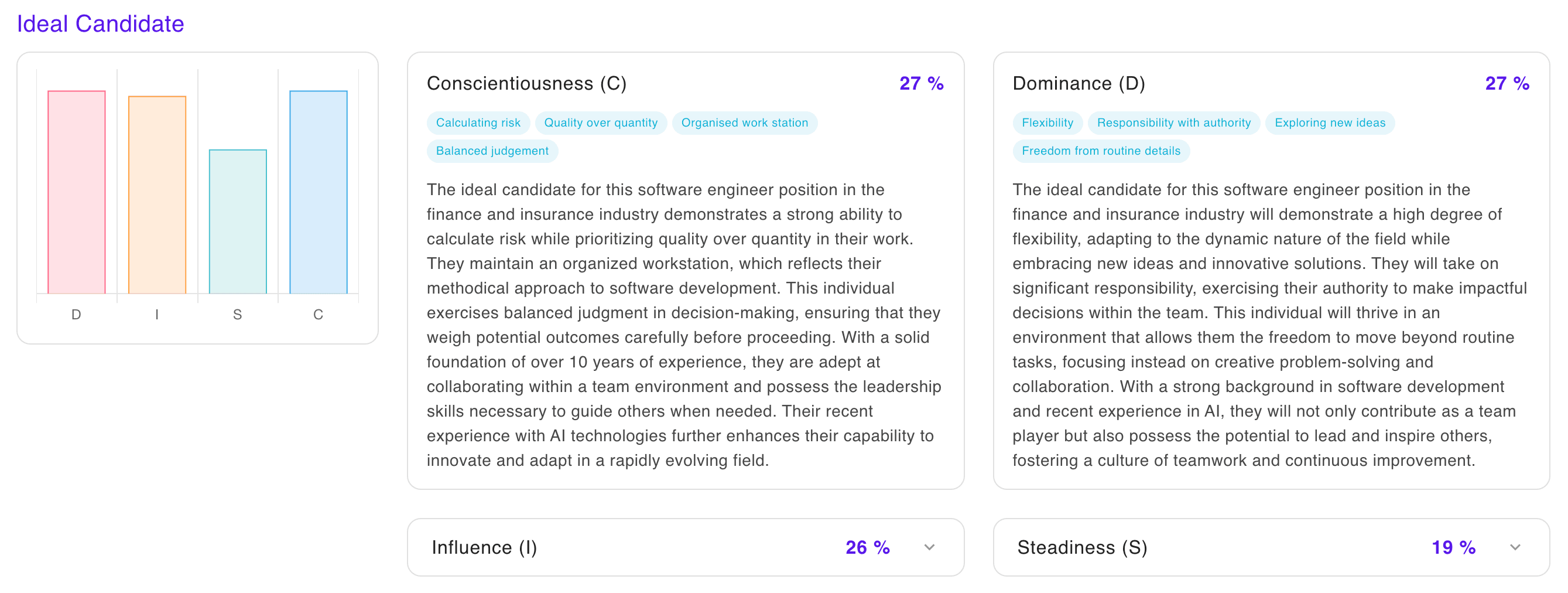
We start from the role, not the candidate. Before anyone applies, our system analyses the job description itself through a reverse DISC process, working backward from what the role demands to the behavioural profile of the person most likely to succeed in it. The output is a written description of your ideal candidate, the specific behavioural pattern this seat actually rewards, built before a single resume lands on your desk.
Step one — we profile the role
Every role gets its own target profile based on what actually predicts success in that specific seat, not a generic template. This becomes the standard every candidate gets measured against.
Step two — candidates complete a short DISC assessment
Each candidate completes a 24-question DISC assessment as part of the process. It takes a few minutes, and it happens before the interview, so their natural behavioural pattern is on record before a confident answer in the room has a chance to shape anyone's opinion of them.
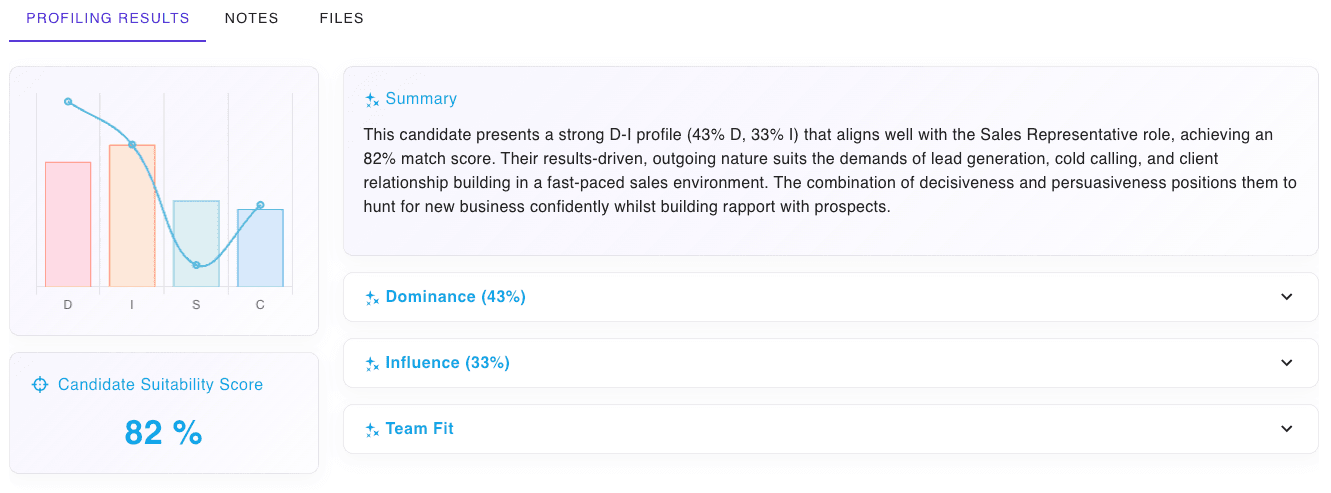
Step three — we compare the two
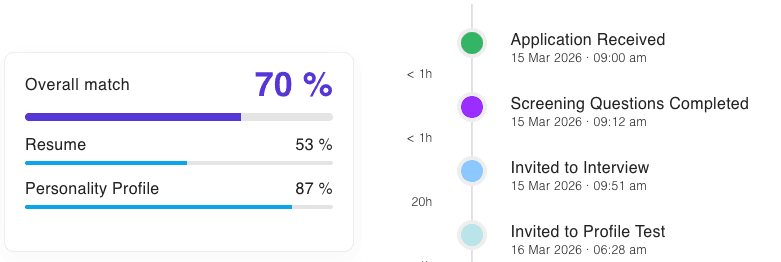
The candidate's result is scored directly against the ideal profile for the role. The comparison shows exactly where a candidate matches what the role needs, and where they don't, turning a personality report into an actual measurement.
Experience DISC for Yourself
The fastest way to understand this is to take the same assessment your candidates would. It's free, takes about ten minutes, and you'll get your own behavioural profile at the end.