







Advertise everywhere at once.
One ad, every board, one click. A listing per location.

Hiring managers and team leaders
Your ad live on multiple job boards today. Every applicant screened for the temperament that leads, not the confidence that interviews. A shortlist worth interviewing inside a week.
Built by recruitment veterans. Money back if the shortlist isn't worth interviewing.
Brilliant at the work. Now they do all of it themselves, and the team has stopped asking.
Great in the room. Three resignations later, the exit interviews all said the same name.
The roster, the escalations and the one-on-ones are yours again, on top of your own job.
Same ad, same board, same sixty CVs that all say "people leader" and mean nothing you can test.
90%
of bad hires are a behavioural or cultural mismatch, not a skills gap
1 in 5
hires that don't work out, at the mis-hire rate most businesses run
30 to 50%
of a year's salary, what one of those costs, and a manager's salary is the big one
2x
more predictive: a structured interview against an unstructured chat
Mismatch figure from SHRM research. Interview predictiveness from the Schmidt and Hunter meta-analysis. Mis-hire rate and bad-hire cost are the assumptions behind the calculator on our pricing page. See the working on the pricing page.
Now multiply by the team. A manager who's wrong for the job doesn't cost you one salary. They cost you every good person who leaves rather than work for them, and each of those is a hire of its own.
A team leader resigns, or a team outgrows its founder. The obvious move is to promote whoever's best at the work, because they've earned it and it's quick.
Or an ad goes up on one board, and the applicants who've "managed teams of twelve" get a call. Nobody asks what happened to the twelve.
Three interviews, and the job goes to the most confident person in the room. Which is the one trait that says least about whether people will want to work for them.
It works often enough that nobody fixes it. Then two resignations land in a month, and the seat is empty twice.
You've run this play before. The manager who was impressive in the interview and impossible in the team. The one you kept too long because moving them out meant admitting the hire. Somewhere along the way you started to wonder whether good managers exist at your size.
You're hiring the way everyone without a recruitment team hires. A CV that lists team sizes, a reference from a mate, and an hour with the most self-assured person you've met all month.
Confidence is easy to interview for and says nothing about whether they'll listen, hold a hard conversation kindly, or let someone else have the good idea. Those are what a team stays for.
The fix is a personality profile of the job itself, built before you advertise, with every applicant measured against it instead of against how they came across on the day.
The team behind GrowMyTeam has built recruitment software since 2000, trusted by thousands of recruiters.
Twenty-five years of watching which managers kept their teams and which emptied them is why the platform profiles for temperament, not just confidence. GrowMyTeam is that lesson, pointed at businesses that do their own hiring.
Every step below exists so the most confident person in the room doesn't win by default.
The platform asks about the role in plain language and builds the ideal candidate from your answers: the experience the role needs and the temperament it takes. Listens before deciding, holds a hard conversation without making it personal, steady when the team isn't. Decided before a single CV arrives.
Job description and ad generated from that profile, in your words after a quick edit, written to attract someone who builds a team rather than someone who's ready to be in charge. No old ad with the dates changed.
SEEK, Indeed, LinkedIn, Adzuna, Glassdoor and the rest, from one screen. Multi-site businesses get a listing per location. The candidates who never open SEEK see your ad on the board they do use.
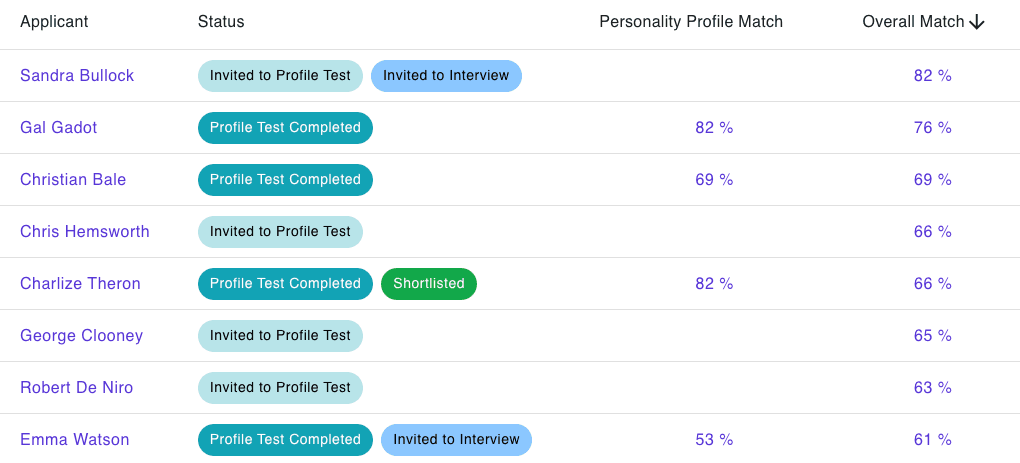
Largest team led and for how long, what happened to it when they left, someone they developed into a promotion, someone they had to let go and how. The answers, the CV and the ideal candidate go through the AI together. It scores every applicant, ranks them, flags the strongest and pushes the ones who've never actually led anyone to the bottom with the reason attached. Sixty applications become ten worth your time. You read ten.
Acknowledgement inside the hour. Status updates when the shortlist is set. In a market where every applicant is somebody's manager right now, and talks, that matters.
The ten worth your time complete a DISC profile. The platform matches each one against the temperament the job takes and tells you, in plain language, how they'll handle an underperformer, whether they'll delegate or hoard, and where they'll struggle. The confident one and the right one are not always the same person.
A structured interview guide for each candidate, built from their profile and the gaps in their CV, so you compare answers instead of impressions. Reference checks sent and returned in writing, from the people they managed as well as the people they reported to. Every ranking, decision and referee answer on file.
Then you make the call. The platform never hires anyone. It makes sure the person you put in charge of your people earned it.
The first week above, one screen at a time.
One ad, every board, one click. A listing per location.
AI scoring against the ideal candidate, with the reasons attached.
Acknowledgements and status updates, sent for you.
A DISC profile of the job, then of every shortlisted candidate.
The same structured questions for every candidate.
Written references, from their team as well as their boss, on file.
Five interviews booked, all against the same questions. You already know which two you'd trust with your team before they walk in.
The seat is filled inside the month. And when the new manager is still there a year on, and so is the team, you know why. You hired the temperament, not the confidence.
15 to 20 percent of package per placement, on a manager's package. You still interview everyone, and the agency's screening is a phone call and a gut feel.
Free, if your evenings are free. The process from the top of this page, with the same odds and the same exit interviews.
Your first month, with the first hire done with you, for less than one resignation. Every board, every applicant screened, structured interviews, references from the people they managed, and a record of every decision.
The Kick-start
The Kick-start is your first month on the Essentials plan. We set the system up for you and run the first hire with you on three one-hour online calls, the way the first week above describes. Then you run two more yourself, in the same month.
After the first month, we'll help you pick the plan that fits your volume. No pressure.
Once off
$499
USD, excl. local taxes
No risk
Money back guarantee
If the shortlist isn't worth interviewing, tell us within seven days of your screening session and the $499 comes back. You decide, not us.
Kick-starts are limited. We take a small number each month.
It doesn't read the adjective. Screening questions ask for the largest team led, what happened to it when they left, someone they developed and someone they let go. The AI scores the answers and the CV against the ideal candidate, and the DISC profile shows whether the temperament matches the job. Adjectives don't score.
It builds the ideal candidate from the role you describe: the experience it needs and the temperament it takes, listens first, steady under pressure, kind in a hard conversation. Every applicant is scored against that profile, so you're comparing them to the job rather than to each other or to whoever interviewed well last time.
Run both through the same process. Load your internal candidate alongside the applicants, profile them the same way, and interview them against the same guide. The answer is usually clearer than the loyalty makes it feel, and either way you can show how you decided.
Multiple boards, including SEEK, Indeed, LinkedIn, Adzuna and Glassdoor, from one screen. Multi-site businesses get separate listings.
Yes. You choose the referees and the questions. A structured reference from a former direct report, in writing, tells you more about a manager than any interview will.
For most management roles, no. If you use an agency for a hard seat, load their CVs into the same process and measure them against the same ideal candidate as your own applicants.
No. It ranks, flags and explains. You interview, you decide, and every step is recorded so you can show your reasoning if anyone asks.
Tell us within seven days of your screening session and we refund the Kick-start in full. You decide whether it was worth interviewing, not us.
The Kick-start is your first month on the Essentials plan: the first hire done with you, then two more jobs you run yourself. After that we'll help you pick the plan that fits your volume. No pressure.
Every week the seat stays empty, your best people are doing the manager's job and wondering why. Start the first hire now, and if the shortlist isn't worth interviewing, you get your money back.